Few engagement ring styles balance elegance and individuality quite like the pear-shaped diamond. With its distinctive teardrop silhouette—rounded at one end and tapered at the other—the pear cut has long symbolised romance, confidence, and a sense of movement. In Australia, pear engagement rings have surged in popularity over the past decade, appealing to couples who want something classic yet slightly unconventional.
Australian buyers are known for being discerning. They care about craftsmanship, ethical sourcing, and long-term value, while still wanting a ring that feels deeply personal. The pear shape ticks all these boxes. Whether set in yellow gold, white gold, platinum, or rose gold, a pear engagement ring offers versatility, visual drama, and a flattering effect on the hand.
This article explores why pear engagement rings Australia, how to choose the perfect one, the design trends shaping the local market, and what to consider before making such an important purchase.
The Enduring Allure of the Pear Cut
The pear-shaped diamond has a fascinating history. Often attributed to Flemish diamond cutter Lodewyk van Bercken in the 15th century, the cut combines the brilliance of a round diamond with the elegance of a marquise. The result is a stone that sparkles beautifully while offering a distinctive outline.
One of the biggest advantages of the pear cut is its ability to elongate the finger. The tapered point draws the eye along the hand, making fingers appear longer and more slender—one reason many Australian brides gravitate towards this shape. Pear diamonds also tend to look larger than other cuts of the same carat weight, offering impressive visual impact without necessarily increasing the budget.
However, the pear cut requires skilled craftsmanship. Symmetry is crucial, and the point must be well-protected to avoid chipping. Australian jewellers are particularly attentive to these details, ensuring stones are well-balanced and set securely.
Why Pear Engagement Rings Are Popular in Australia
Australia’s engagement ring market reflects broader lifestyle values: quality, sustainability, and understated luxury. Pear engagement rings align beautifully with these priorities.
First, Australians often prefer designs that feel timeless rather than overly trend-driven. The pear shape, while distinctive, has endured for centuries. It feels elegant without being flashy, making it suitable for everyday wear—a key consideration for active lifestyles.
Second, Australia has a strong appreciation for ethical and transparent sourcing. With a well-known diamond mining history and increasing consumer awareness, buyers often want to know where their stones come from and how they are produced. This has influenced design choices, material selection, and even the types of diamonds considered.
Finally, Australian fashion tends to embrace individuality. A pear-shaped ring stands out subtly from more common round or princess cuts, allowing wearers to express personal style without straying too far from tradition.
Design Styles: From Classic to Contemporary
Pear engagement rings in Australia are available in an impressive range of styles, catering to diverse tastes.
Solitaire settings remain a favourite. A single pear-shaped diamond, set vertically or occasionally horizontally (often called an east-west setting), creates a clean, sophisticated look. Vertical solitaires emphasise the stone’s elongating effect, while east-west designs feel modern and artistic.
Halo settings add extra sparkle by surrounding the centre stone with smaller diamonds. This style enhances brilliance and makes the pear appear larger. In Australia, halos are often kept refined rather than overly ornate, maintaining balance and wearability.
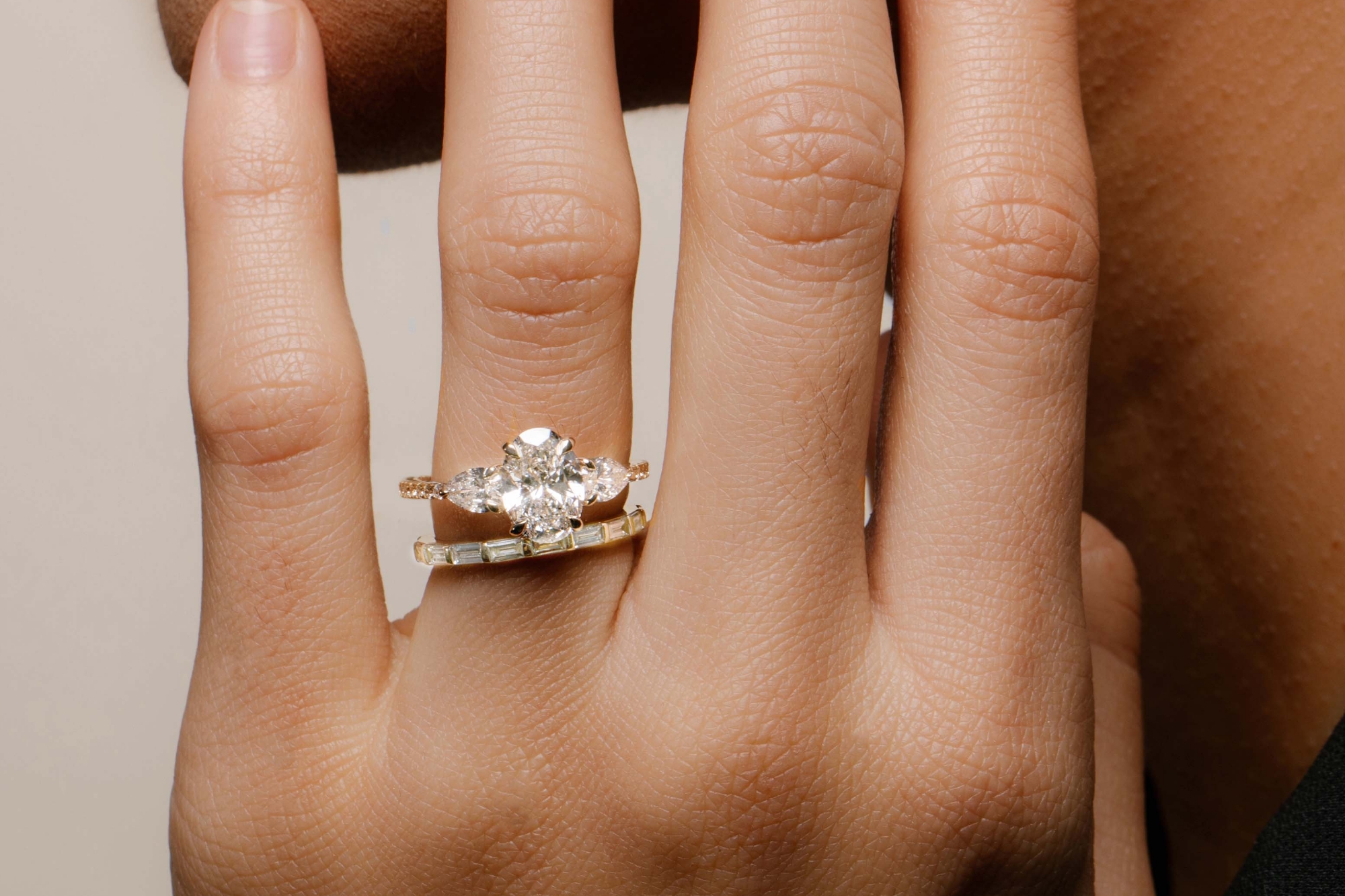
Three-stone rings are another popular option. Pairing a pear centre stone with tapered baguettes or smaller pears creates a harmonious, elegant look. Symbolically, three-stone rings represent the past, present, and future—an appealing sentiment for many couples.
Vintage-inspired designs have also found a strong following. Delicate milgrain edges, intricate filigree, and soft curves complement the romantic shape of the pear. These styles appeal to those who love heritage aesthetics with modern craftsmanship.
Choosing the Right Pear Diamond
Selecting a pear-shaped diamond involves a few considerations beyond the usual carat, colour, clarity, and cut.
Symmetry and proportions are especially important. A well-cut pear should have a pleasing balance between its rounded end and pointed tip, with no visible bulges or flat spots. The “bow-tie effect”—a shadow across the centre—can appear in many fancy shapes, but it should be minimal in a high-quality stone.
Length-to-width ratio influences the overall look. Some prefer a longer, slender pear for maximum elongation, while others like a slightly wider shape for a softer appearance. There is no “correct” ratio; it comes down to personal taste.
Setting protection matters. The pointed tip is the most vulnerable part of the stone, so prongs or a bezel should adequately shield it. Australian jewellers are well-versed in secure settings that don’t compromise aesthetics.
Ethical Considerations and Modern Alternatives
Ethics play a significant role in engagement ring choices across Australia. Many buyers want reassurance that their purchase aligns with their values, particularly regarding environmental impact and labour practices.
This is where alternatives to traditionally mined diamonds have gained traction. Some couples choose stones created through advanced technological processes that replicate the properties of natural diamonds. When thoughtfully chosen, lab created diamonds can offer clarity, beauty, and traceability that appeal to ethically minded Australians.
It’s worth noting that the choice between mined and non-mined diamonds is deeply personal. What matters most is transparency and informed decision-making. Reputable Australian jewellers are typically happy to explain sourcing, certification, and long-term considerations without pressure.
Metal Choices That Complement the Pear Shape
The metal you choose can dramatically influence the look of a pear engagement ring.
White gold and platinum are popular for their sleek, contemporary feel. They enhance a diamond’s brilliance and suit minimalist designs. Platinum, in particular, is valued in Australia for its durability and hypoallergenic properties.
Yellow gold offers warmth and a classic aesthetic. It pairs beautifully with vintage-inspired settings and can make a pear diamond appear slightly whiter by contrast.
Rose gold has seen steady popularity, especially among younger couples. Its soft blush tone complements the romantic nature of the pear shape and works well with both simple and intricate designs.
Many Australian jewellers also offer mixed-metal designs, combining, for example, a platinum setting with a yellow gold band for a unique, personalised look.
Certification and Buying with Confidence
When investing in a pear engagement ring, certification is crucial. Independent grading reports from recognised gemmological laboratories provide assurance about a diamond’s quality and authenticity.
In Australia, certificates from institutions such as GIA or IGI are widely accepted and respected. These reports detail cut proportions, clarity characteristics, colour grading, and more—information that is particularly valuable when assessing fancy shapes like pears.
Buyers are also encouraged to view stones in person whenever possible. Pear diamonds can look very different depending on lighting and setting, so seeing how a stone performs under natural light can be invaluable.
Pear Engagement Rings and Australian Lifestyle
One often-overlooked aspect of ring selection is lifestyle compatibility. Australians tend to lead active lives, whether that involves outdoor work, sports, or frequent travel.
Pear engagement rings can absolutely suit an active lifestyle, provided the setting is practical. Lower-profile designs, secure prongs, and durable metals reduce the risk of damage. Many jewellers will tailor designs to balance elegance with everyday wearability.
Maintenance is also straightforward. Regular cleaning and annual inspections help ensure prongs remain secure and the stone stays brilliant.
The Future of Pear Engagement Rings in Australia
Looking ahead, pear engagement rings show no sign of fading from the Australian market. Instead, they continue to evolve alongside consumer values and design innovation.
Customisation is becoming increasingly important. Couples want rings that reflect their story, whether through bespoke settings, engraved details, or unique stone combinations. Advances in design technology have made custom pear rings more accessible than ever.
At the same time, interest in alternative diamond options continues to grow. For some, lab created diamonds represent a blend of modern science and timeless romance, fitting neatly into Australia’s forward-thinking yet tradition-respecting culture.
Sustainability, transparency, and personal expression are likely to shape future trends, and the adaptable pear shape is well-positioned to meet these expectations.
Conclusion
Pear engagement rings hold a special place in Australia’s jewellery landscape. Their elegant silhouette, flattering proportions, and rich history make them a compelling choice for couples seeking something both classic and distinctive. From minimalist solitaires to intricate vintage designs, the pear shape offers remarkable versatility.
Australian buyers value quality, ethics, and individuality—and pear engagement rings align seamlessly with these ideals. Whether crafted with a traditionally mined stone or thoughtfully chosen alternatives such as lab created diamonds, the most important factor is that the ring reflects the wearer’s style and values.
Ultimately, a pear engagement ring is more than a beautiful piece of jewellery. It is a symbol of commitment, shaped by tradition yet open to modern interpretation—much like Australia itself.